No products in the cart.

Entry-Level Protection: Cybul V1 Miata Roll Cage Review & Setup Guide
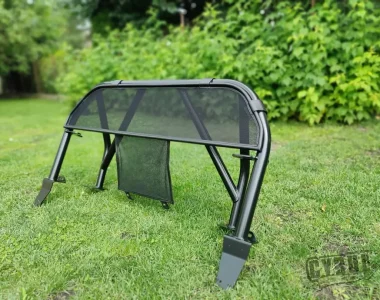
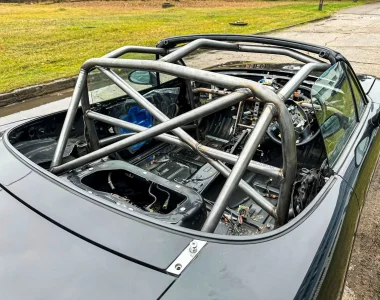
If you’re building a Miata for track days, autocross, or just want a sharper, safer chassis, the Cybul V1 Roll Cage Miata deserves a serious look. It sits in that important middle ground between basic rollover protection and a full race-prep interior, giving drivers a practical path toward better safety and more body control without overcomplicating the build.
For many NA, NB owners, the first big safety upgrade comes after suspension and brakes. That’s where the Cybul V1 starts making sense: it adds real structural confidence, supports harness-based seating setups, and helps preserve the cabin in the event of a rollover. If you’re also dialing in the rest of the car, it’s worth exploring our Miata knowledge base for setup basics, or browsing the TopMiata shop to plan the rest of your track build around the cage.
In this review and setup guide, we’ll break down what the Cybul V1 does well, where it fits in a real Miata build, and what owners should know before committing to installation. We’ll also touch on how cage fitment interacts with seat position, soft top or hardtop use, alignment, and the rest of your track-day hardware so you can make a smart decision rather than a rushed one.
Why the Cybul V1 Roll Cage Miata Makes Sense for Entry-Level Track Builds
The biggest reason Miata owners look at a cage is simple: the car is light, low, and incredibly rewarding at speed, which also means safety should never be an afterthought. The Cybul V1 Roll Cage Miata is attractive because it delivers a meaningful step up from a roll bar alone, especially for drivers who are already attending HPDE events or running a more committed tire and suspension package.
On track, chassis rigidity is more than a buzzword. A stiffer cabin structure can make the car feel more consistent under load, particularly if you’re running sticky 200-treadwear or 100-treadwear tires, performance coilovers, and more aggressive alignment settings. A common track alignment for a dual-purpose Miata might be around -2.0 to -3.0 degrees front camber, -1.5 to -2.5 degrees rear camber, and slight front toe-out with rear toe neutral or a touch of toe-in. A cage doesn’t replace that tuning, but it helps the suspension work against a more stable platform.
It’s also worth noting that rollover protection isn’t just about “looking race car.” The Miata’s open-top design makes occupant space and roofline integrity especially important. For those researching the broader safety picture, the NHTSA is a useful resource on vehicle safety standards, while the Mazda MX-5 historical overview offers context on why the platform became so beloved in the first place.
What kind of driver is this cage for?
The V1 is best suited to owners who want a serious safety upgrade without jumping immediately to a full race shell and welded custom cage. If your Miata sees regular track days, spirited canyon use, or even competition where cage rules allow a simpler configuration, it can be a very compelling first step.
It’s also appealing for builders who want the car to remain relatively livable. The goal here is not to create a stripped-out inconvenience machine. This is an “entry-level protection” solution that still respects the fact that many Miatas are driven to events, not trailered everywhere.
That balance is important. A cage that is too aggressive for your use case can make the car miserable, while a setup that’s too soft can leave you underprotected. The Cybul V1 lives in that useful middle zone for a lot of enthusiasts.
Fitment, Cabin Space, and Installation Considerations
Fitment is the first question every Miata owner asks, and for good reason. Cage geometry has to work around seat rails, seat height, helmet clearance, soft top mechanisms, and hardtop use if you still want some street usability. On the Miata platform, even small changes in seat design or helmet clearance can make a huge difference in comfort and safety.
Before installation, measure from the seat cushion to helmet height with your normal driving position. If you run fixed-back seats, the choice of brackets matters just as much as the cage itself. Top-mounted or bottom-mounted seat hardware changes your seating height, which can affect whether you need a lower seat base or a different steering wheel dish. For those planning the full cockpit, consider pairing the cage with a reinforcement harness bar Miata setup or proper seat mounting hardware such as side mount seat brackets for Miata depending on how far you want to take the build.
As with any safety component, installation quality matters as much as the part itself. A cage should be installed by someone experienced with chassis prep, torque specs, welding or bolting procedures, and interior trimming. Expect some level of panel removal, carpet modification, and possible interior trimming around trim panels, seat belt anchors, and rear trim sections. If your goal is to preserve a near-stock cabin, set expectations early: safety hardware always asks for some compromise.
One smart approach is to stage the build in steps. Start with seat placement, steering wheel position, and harness routing before finalizing cage installation. That prevents the classic mistake of finishing the cage first and then realizing the seat is too high, the wheel is too close, or the harness angles are wrong.
| Setup Area | What to Check | Why It Matters |
|---|---|---|
| Seat height | Helmet clearance, shoulder line, visibility | Prevents head contact and improves driving position |
| Harness geometry | Shoulder angle, lap belt angle, anti-submarine routing | Critical for restraint effectiveness |
| Interior trim | Rear panels, plastics, top clearance | Ensures the cage fits without interference |
| Chassis prep | Rust, seam condition, mounting points | Improves installation quality and long-term durability |
How the Cybul V1 Changes the Driving Experience
One of the most overlooked benefits of a cage is how it changes the feel of the car even before you push hard. The Miata already has a beautiful sense of communication, but adding structure can make steering response feel cleaner and mid-corner load transfer more predictable. That’s especially noticeable on cars running stiffer spring rates, upgraded sway bars, and better dampers.
For example, many track-focused Miatas run spring rates in the neighborhood of 6K to 8K front and 4K to 6K rear on lighter builds, with more aggressive setups going higher depending on tire and aero. Once you reach that level, chassis movement becomes easier to detect, and a cage can help the car feel more tied together. It doesn’t create grip, but it lets you better use the grip you already have.
Brake confidence also improves when the cabin feels more stable. If you’re running high-temp fluid with a boiling point well above street-grade fluid, track pads, and perhaps a brake stopper or pedal support, the whole car becomes more consistent at the limit. That consistency matters on a platform where feedback is part of the joy. For related setup inspiration, check out Miata brake stopper upgrades and frame rail reinforcement for Mazda MX-5 Miata if you want to strengthen the rest of the platform too.
Pro tip: A cage works best as part of a full system. Pair it with proper seat mounting, quality harnesses, fresh fluid, and a suspension setup matched to your tire compound. Safety and performance should evolve together.
Street manners and practical tradeoffs
There’s no getting around it: a roll cage changes daily livability. Entry and exit become more awkward, cabin noise increases, and rear-seat access is effectively gone. For some drivers, that’s a fair trade. For others, a roll bar or harness bar may be enough. The key is to be honest about how often the car leaves the garage.
That said, the Cybul V1 is appealing because it can still preserve a relatively clean, purpose-built cockpit. If your Miata is already transitioning away from commuter duty and toward event duty, the practicality penalty may be smaller than you think.
In other words, this is a mod for owners who are ready to commit to the platform’s next phase. It’s less about cosmetic aggression and more about building a car that can take repeated hard use with more confidence.
Setup Tips for Track Use and Long-Term Reliability
Once installed, the cage should be treated like part of the car’s core setup, not just a bolt-on accessory. Recheck fasteners after the first few heat cycles, inspect any trim contact points, and verify that your seat and harness positions still align properly after a hard session. Small shifts can happen, especially if the interior was trimmed during installation.
It’s also wise to pair cage installation with a broader refresh. Miatas that see track duty benefit from fresh coolant, healthy belts, solid motor mounts, and cooling improvements like a better radiator or cooling plate. If your car is an NA or NB, a well-planned cooling upgrade can make a dramatic difference in consistency during the summer. For broader platform support, browse radiator cooling plate options and heat shield solutions for Mazda MX-5 Miata.
Finally, think about your tire and brake package as part of the same conversation. A cage makes more sense when the rest of the car is ready to exploit it. If you’re still on street tires, a softer suspension setup, and stock fluid, you may not feel the full payoff. But if you’re already running better rubber, improved brake feel, and a disciplined alignment, the chassis benefits become much more obvious.
That’s the real value of the Cybul V1: it supports a smarter progression. Instead of buying parts in isolation, you’re building a safer, more cohesive Miata that can grow with your skill level.
Final Verdict: Cybul V1 Miata Roll Cage Review & Setup Guide
For Miata owners stepping into the track world, the Cybul V1 Roll Cage Miata is a strong entry-level protection upgrade that brings real safety, improved chassis confidence, and a more serious motorsport feel to the cockpit. It’s not the cheapest or simplest mod you’ll ever install, but it is one of the most meaningful if your build is moving beyond casual street use.
Its biggest strengths are clear: better rollover protection, a more rigid-feeling cabin, and a foundation for harnessed seating and track-oriented driving. Its biggest compromises are equally clear: more installation complexity, reduced daily comfort, and a cockpit that becomes more competitive in character. That’s exactly why it makes sense for the right owner. If you’re building a Miata to drive harder and learn faster, this is the kind of upgrade that can pay dividends every time you turn a wheel.
For the enthusiast who wants an honest, track-focused safety step without jumping straight into a full custom cage, the Cybul V1 hits a very practical sweet spot. Build the rest of the car thoughtfully, install it correctly, and it can become one of the most important parts of your entire Miata setup.