No products in the cart.

Cybul V3 Roll Cage for Mazda Miata: Comprehensive Review & Buyer’s Guide
If you’re building a serious track-focused MX-5, the Cybul V3 Roll Cage Miata deserves a real look. This isn’t just about ticking a safety box; it’s about adding rollover protection, improving chassis rigidity, and giving your NA, NB a more confidence-inspiring feel when the car is being pushed hard. For Miata owners who already understand the value of a stiff platform, the right cage can transform the way the car responds under braking, turn-in, and curb strikes.
At TopMiata, we see roll protection as part of the broader performance conversation. A Miata with proper safety gear, a solid seat mounting solution, and a well-thought-out suspension setup is a different machine from a “street car with track days.” If you’re also planning to check out Miata seat mounting options, reinforce the chassis with frame rails, or pair the cage with other track hardware from the TopMiata shop, this guide will help you understand where the Cybul V3 fits in the build path.
What the Cybul V3 Roll Cage Miata Brings to the Build
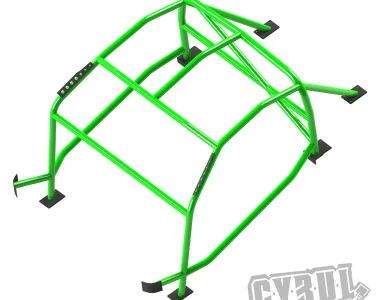
The biggest reason enthusiasts choose a roll cage is simple: safety. In an open-top Miata, rollover protection matters more than almost anywhere else in the sports-car world. The Cybul V3 Roll Cage Miata is designed for drivers who want more than a basic roll bar. It offers a more serious motorsport-style structure that can better protect occupants in a rollover scenario while also increasing torsional rigidity. That added stiffness helps the suspension do its job more consistently, especially on sticky tires and aggressive alignment settings.
That rigidity gain is not just marketing language. Once you start running higher spring rates, more negative camber, and a more capable brake package, the chassis becomes a more important part of the performance equation. A cage can reduce the sense of cowl shake and make the car feel more connected, especially in older NA and NB cars. If you’ve been studying the platform in general, Mazda’s own long-running lightweight roadster philosophy is worth revisiting through the official Mazda site and the broader Mazda MX-5 history overview, both of which help explain why chassis balance has always mattered so much to this car.
For track-day drivers, the V3 also makes sense because it supports the rest of the safety ecosystem: fixed-back seats, proper harnesses, fire suppression, and a helmeted driving environment. That’s especially relevant if you’re running R-compound or 200-treadwear tires, where cornering loads increase dramatically. A cage won’t make the car faster by itself, but it can make the whole package safer and more stable when you’re chasing lap time.
Fitment, Installation, and What to Expect
Fitment is where buyers need to slow down and plan carefully. A roll cage is not a casual bolt-on accessory, and the Cybul V3 Roll Cage Miata should be treated as a major build component. In most cases, installation will involve interior removal, careful test fitting, and attention to how the cage interacts with seats, trim, soft tops, hardtops, harnesses, and door operation. If your car still sees street use, this is the point where you need to be honest about comfort, noise, and access.
On a Miata, packaging is always tight. That’s part of the charm, but it means a cage can interfere with seat travel, seat recline, and access to the cabin. It’s wise to pair the cage with the correct seat hardware and, in many builds, a fixed-back seat. Our side-mount seat brackets for Miata and full side-mount seat bracket options are ideal references if you’re planning the cockpit around a cage from the start. That approach usually yields better ergonomics and safer harness geometry.
Installation should also be tied to the rest of your chassis prep. A cage is most effective when the car is already sorted with fresh suspension bushings, good alignment, and solid mounting points. For example, a track-focused Miata on 205/50R15 or 225/45R17 performance tires often benefits from around -2.0 to -3.0 degrees front camber, -1.5 to -2.2 degrees rear camber, and minimal toe changes depending on the class and tire choice. If the car is lowered, checking steering geometry and bump steer becomes more important too. That’s where supporting parts like steering rack spacers can help restore better front-end behavior.
Expect the installation process to be more involved than a roll bar. This is not the kind of mod you rush on a weekend afternoon without planning. In a well-executed build, the cage is fitted after the seat position, harness mounting points, and interior trim path are finalized. That sequence avoids expensive rework and ensures the finished cockpit feels intentional rather than cramped.
Chassis Rigidity, Safety, and Track Performance
One of the underrated advantages of a cage is how it changes the way the Miata communicates with the driver. The MX-5 platform thrives on feedback, and a stiffer shell can sharpen that feedback without ruining the playful balance enthusiasts love. On turn-in, the steering can feel more immediate. Under trail braking, the platform can feel less vague. Over a series of fast transitions, the car may respond with more consistency because the suspension is working against a more stable structure.
That said, a cage is not a substitute for proper setup. If your brake system is fading, your fluid is old, or your tires are out of their depth, the cage won’t solve those issues. Track builders should think holistically: high-temperature brake fluid, proper pads, cooling support, and enough alignment to support the tire. A brake fluid with a high dry boiling point, often above 600°F in serious track use, is a smart companion mod. For cooling, many Miata builders also look at a better radiator solution or airflow management, such as a radiator cooling plate or related cooling support.
Safety is the other half of the equation. A cage is only as good as the rest of the safety system around it. That means a properly mounted seat, a harness with the correct shoulder angle, and a clear understanding of your sanctioning body’s rules. If you’re building for time attack, HPDE, or wheel-to-wheel, the Cybul V3 Roll Cage Miata can be a major step toward a more serious and compliant build. It also gives you a better foundation if you later add a fire extinguisher support or other motorsport safety essentials.
Pro tip: Plan the cage around the driver, not the other way around. Seat height, helmet clearance, harness bar geometry, and steering wheel position should all be solved before final installation. That’s how you get a car that is both safer and more comfortable to drive hard.
Who Should Buy the Cybul V3 Roll Cage Miata?
This cage is best suited to owners who are genuinely building around performance and safety, not just appearance. If your Miata is a weekend cruiser, a simpler roll bar may be enough. But if you’re regularly attending track days, running sticky tires, or chasing consistent lap times, the Cybul V3 makes a lot more sense. The extra structure is valuable, especially on older NA and NB cars where age and chassis fatigue can be part of the equation.
It also makes sense for enthusiasts who want a build that evolves over time. Many Miata projects start with suspension and brake upgrades, then move to seats and harnesses, and finally land on a cage once the driver starts getting serious. In that context, the Cybul V3 becomes a long-term investment rather than a one-season upgrade. It supports future mods and gives the car a much more motorsport-focused identity.
For style-conscious owners, there’s another angle: a properly executed cage transforms the cabin visually. It signals intent. The car stops looking like just another roadster and starts looking like a track tool. That matters to a lot of the Miata community, especially builders who appreciate authentic function-first design. If you enjoy exploring the wider Miata ecosystem, browse more performance inspiration in the TopMiata knowledge base and see how other owners approach chassis, safety, and interior planning.
Final Verdict: Cybul V3 Roll Cage Miata
The Cybul V3 Roll Cage Miata is a strong choice for drivers who want real rollover protection, a stiffer chassis, and a more serious track-day foundation. It is not the cheapest or simplest modification, but that is exactly why it appeals to committed builders: it delivers meaningful safety and performance benefits when installed as part of a complete plan.
If your Miata is moving beyond casual street use and into regular motorsport duty, the V3 is the kind of upgrade that makes sense early rather than late. Pair it with the right seat, harness, suspension, and braking setup, and you’ll have a platform that feels more precise and far better protected. For the right owner, it’s one of the most important modifications you can make to an MX-5.
Bottom line: if your goal is to build a safer, sharper, and more track-capable Miata, the Cybul V3 deserves a spot on your shortlist.