No products in the cart.
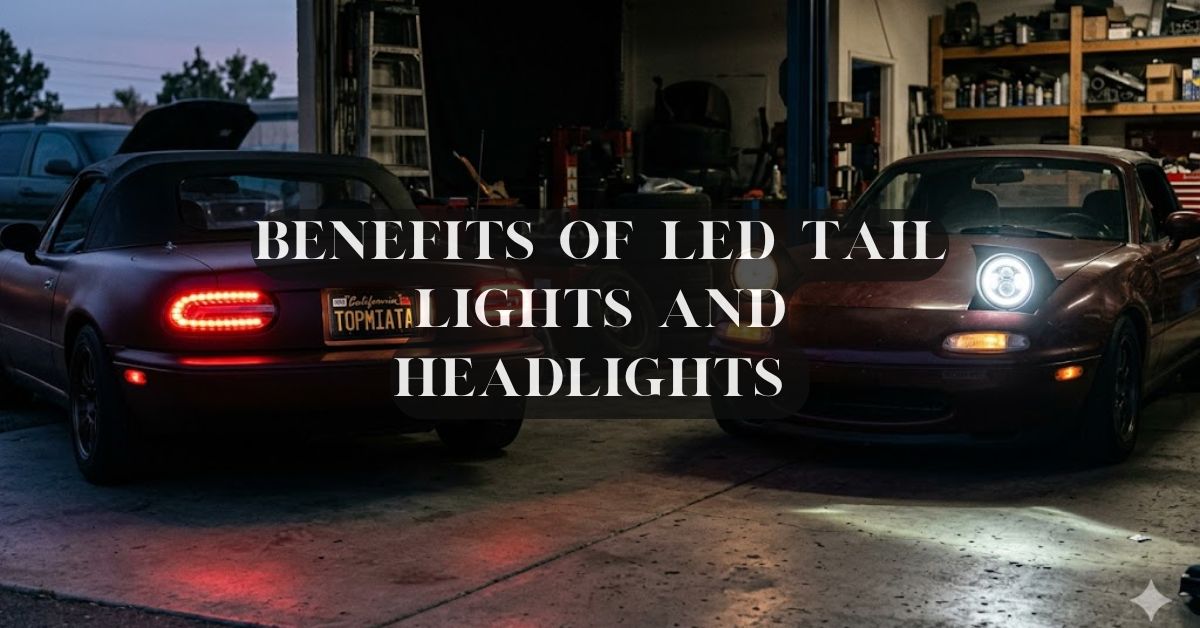
Benefits of LED Tail Lights and Headlights Against Traditional Halogen — A Miata Owner’s Reality Check
The benefits of LED tail lights and headlights over traditional halogen lights are not subtle—they’re measurable, and on a lightweight roadster like the Miata, they matter more than most owners expect. A study by the IIHS found a 19% reduction in nighttime single-vehicle crash rates for vehicles equipped with headlights rated “Good” versus those rated “Poor.” Your NA’s pop-up halogens, or your NC’s dim factory tail lights, are sitting somewhere on the wrong end of that spectrum. This article breaks down exactly why a Miata lighting upgrade is one of the highest-value changes you can make — for safety, for style, and for the long-term health of your build.

Why Halogen Was Never the Right Answer for Your Miata
Halogen technology is decades old. It burns hot, draws significant amperage, and produces a yellow-spectrum output that struggles to illuminate road edges and signs at speed. For a rear-wheel drive roadster with a short wheelbase and quick turn-in, what you see at the last second genuinely matters.
The NA and NB used sealed-beam units from the factory. The NC moved to composite housings but still shipped with halogen bulbs across most trims. Even the ND, which introduced projector housings, shipped lower trims without the full LED suite. Across every generation, the factory lighting was a compromise—functional, legal, and uninspiring.
Halogen bulbs also fail more often. The filament is fragile, heat cycles degrade it, and road vibration accelerates the process. On a car you actually drive hard, that matters. NA Miata lighting upgrades specifically address a platform that’s now 30-plus years old—and those original sealed beams have had a long time to fade, crack, and dim.
The Real Benefits of LED Tail Lights and Headlights vs Halogen
The core benefits of LED tail lights and headlights against traditional halogen come down to four things: output, response time, longevity, and electrical load. None of these are marketing language. Each one changes how your Miata behaves on the road.
Brightness, Color Temperature, and Beam Quality
LED emitters produce a whiter, higher-kelvin light than halogens. That shift in color temperature improves contrast on unlit roads, making lane markings, road edges, and obstacles easier to read at a glance. This is not a cosmetic difference — it’s a functional one.
On the rear, MX-5 LED taillights illuminate faster than halogen. The response time advantage is real: LEDs reach full brightness in milliseconds versus the comparatively slow ramp-up of a tungsten filament. At highway speeds, that gap in reaction time for the driver behind you is measured in feet — and on a small roadster, that buffer matters.
Beam shape also improves. Well-engineered Miata LED headlights—particularly those designed around the 7-inch round housing format of the NA—throw a crisper cutoff line than a halogen sealed beam. Less scatter, more usable light on the road surface ahead.
Night Driving Safety — The Numbers
Night driving safety is the argument that converts skeptics. If your build is performance-focused, visibility is part of the performance equation. You cannot respond to what you cannot see, and at 60 mph, you are covering roughly 88 feet per second—meaning every extra foot of illumination is a genuine safety margin, not just aesthetics.
The IIHS data backs this up consistently. Better-rated headlights reduce certain nighttime crash categories meaningfully. For a Miata owner who actually uses the car rather than just shows it, that argument lands differently than it does for a daily-driver commuter.
Did You Know?
IIHS research estimates a 12% to 29% reduction in certain single-vehicle nighttime crash rates when comparing vehicles with “good-rated” headlights versus “poor-rated” headlights—a range that reflects how significantly beam quality changes real-world outcomes.
Miata LED Headlights — Generation by Generation
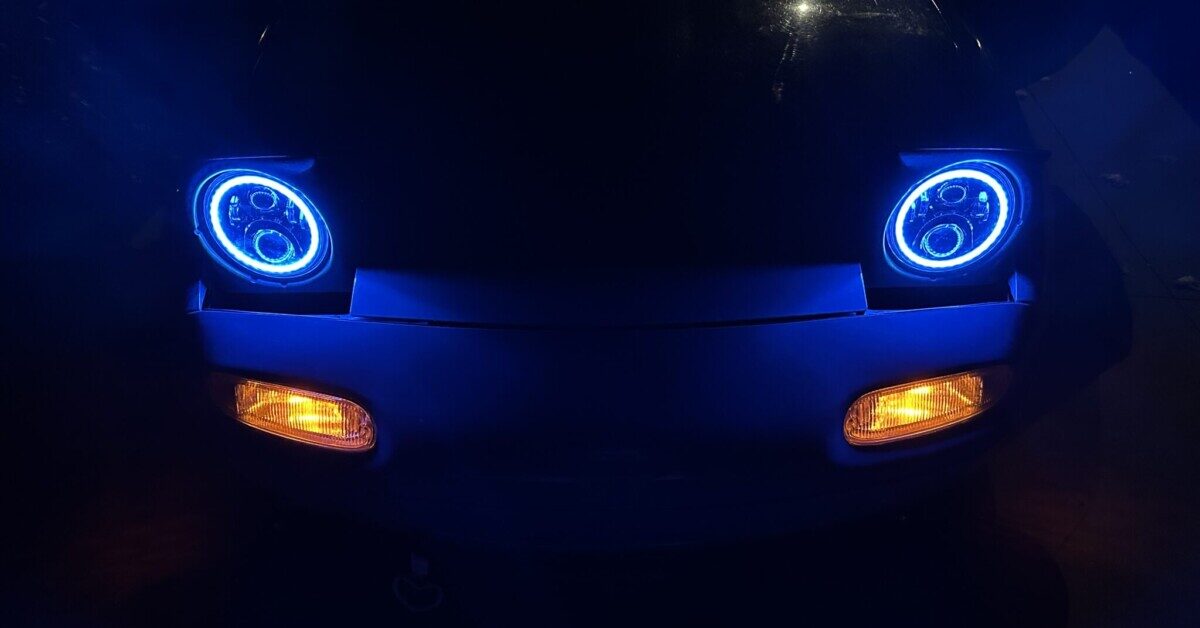
Each Miata chassis handles a lighting upgrade differently. The platform and housing format dictate what options are available, how complex the install is, and what performance you can realistically expect from the swap.
NA Miata LED Bulbs and the 7-Inch LED Headlight Conversion
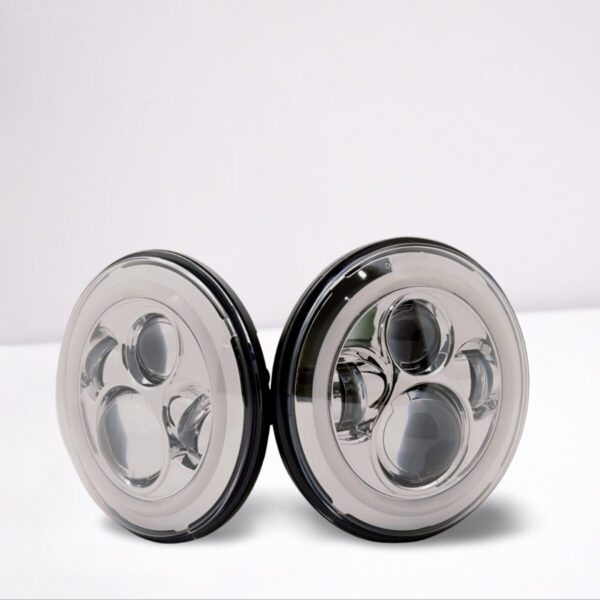
The NA uses the H6024 sealed beam format—a 7-inch round unit that has become one of the most upgrade-friendly headlight configurations in the enthusiast world. The 7-inch LED headlight replacement for the NA slots directly into the factory buckets with no housing modification. No cutting, no custom brackets.
Options like the Miata NA Full Angel Eyes LED Halo Headlights are a direct OEM replacement with plug-and-play installation. You get full LED output, a halo accent ring, and a modern beam pattern—all within the original housing footprint. NA Miata LED bulbs have never been simpler to source or install.
The pop-up mechanism on the NA adds a layer of character that no other Miata generation can replicate. Upgrading what’s inside those pods makes the whole setup feel intentional—enthusiast-built rather than factory-forgotten.
NB, NC, and ND—What Changes Across Generations
The NB moved to fixed composite housings. Halogen vs. LED conversion on an NB typically involves either bulb swaps within the existing projector or reflector housings or a full housing replacement. Side marker upgrades are also popular on NB—the clear lens LED side marker set for NA and NB gives a cleaner, more modern look without affecting the OEM silhouette.
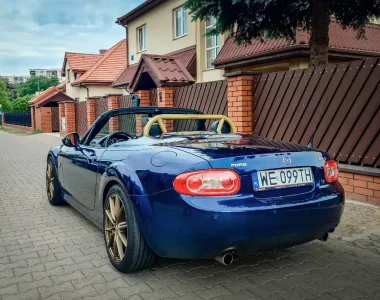
The NC (2006–2015) used composite headlight housings with halogen projectors on base trims. The NC2 and NC3 variants in particular benefit from a full LED taillight assembly upgrade—units like the E-Mark certified LED taillight assembly are designed as a direct replacement, with dynamic startup animation and improved beam output across all three rear lighting functions.
The ND arrived with the cleanest factory lighting of any generation, but lower trims still shipped with halogen. An ND with proper Miata LED headlights installed behaves like the spec it always should have been.
MX-5 LED Tail Lights: Function First, Style Follows
MX-5 LED taillights serve a purpose beyond aesthetics. The combination of faster illumination response, higher output, and more precise light distribution makes every driver behind you more aware of your braking. That is a functional upgrade, not a cosmetic one.
On the NC specifically, the factory taillight assemblies are aging. Seals fail, reflectors fade, and the amber turn signal integration looks increasingly dated against modern road traffic. A full LED taillight assembly replacement—E-mark certified for road legality across European markets and beyond—addresses all of it in a single install.
CarbonMiata’s LED taillight lineup for NB and NBFL is another strong option for that generation. The Halo LED Dual Tail Lights for NB/NBFL deliver multi-function lighting with improved brightness across brake, running, and reverse circuits. The integration is clean and the output is a genuine step up from the factory halogen setup. Browse the full lights collection for NB-specific fitment options.
Sequential LED Indicators — More Than a Visual Upgrade
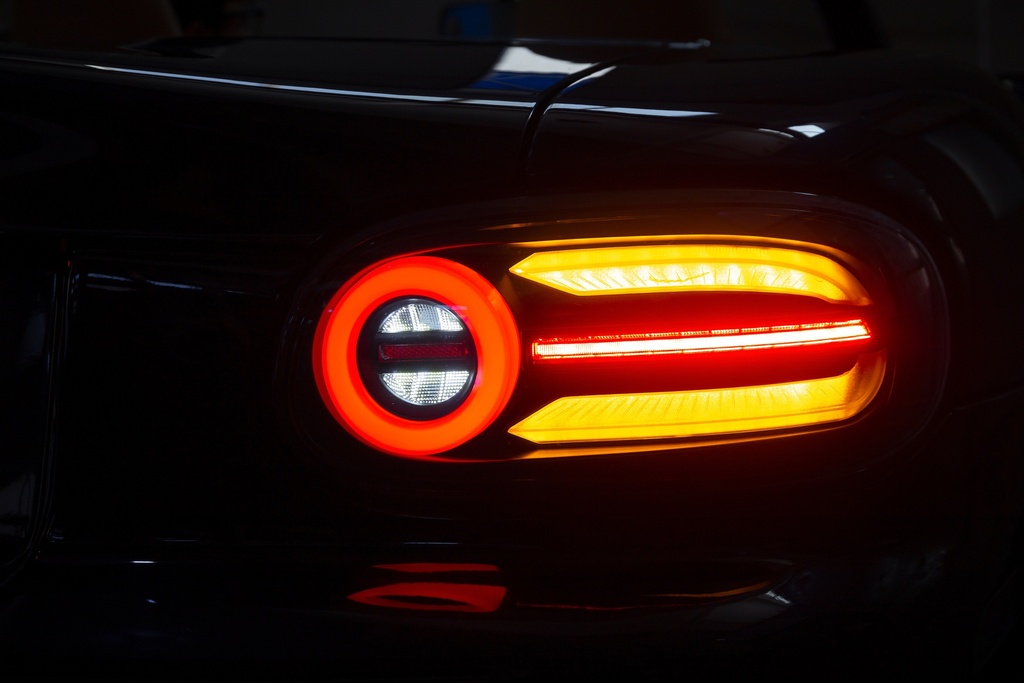
Sequential LED indicators deserve specific attention. They are not purely a styling choice. The animated sweep-direction signal makes your turn intent more legible to other road users—particularly at intersections and during lane changes at speed. It communicates intent over a longer viewing angle and with greater persistence than a static flash.
For a roadster that sits low and can be difficult to spot in traffic, that added communication layer has real value. Sequential LED indicators on the NA and NB platforms transform a factory blinker into something that reads instantly and clearly, from directly behind or from an angle.
Halogen vs LED Conversion—What You Need to Know Before You Buy
Halogen vs. LED conversion is not always a straight swap. There are electrical considerations that matter, and skipping them leads to the most common complaints: flickering, error codes, and premature bulb failure. Understanding the basics before you order saves time and frustration.
Plug-and-Play LEDs and Canbus Compatibility
Most modern Miata LED headlights and taillight assemblies are designed as plug-and-play LEDs—meaning they use the factory harness connector without modification. For the NA, where the H6024 sealed beam is a self-contained unit, the swap is genuinely straightforward. Unplug the old beam, plug in the new one, adjust aim, and done.
On NB, NC, and ND platforms with more complex electrical systems, CANbus compatibility becomes relevant. LED bulbs draw significantly less current than halogens. The car’s body computer can interpret that reduced draw as a dead bulb and trigger a warning light or hyper-flash condition on indicators. CANbus-compatible LEDs include built-in resistors that mimic the load of the halogen, resolving the issue at the bulb level rather than requiring a harness modification.
Quality plug-and-play LEDs—particularly those sourced from manufacturers who design specifically for the Miata platform—will document CANbus compatibility clearly. If a listing does not mention it, ask before buying. Our curated selection at led.topmiata.com is built around fitment-verified options for each generation, removing the guesswork entirely.
Electrical Load and Your Miata’s Charging System
LEDs draw a fraction of the current that halogen bulbs consume. Research from Penn State summarizes that LEDs use roughly 10% of the electricity that an equivalent incandescent or halogen source requires. On an NA or NB running an aging alternator, that reduced load is meaningful—it keeps more capacity available for ignition, fuel systems, and ancillaries.
For a lightweight, rear-wheel-drive roadster built around simplicity, reducing electrical demand aligns directly with the OEM-plus philosophy. You are not adding complication—you are refining what was already there.
Did You Know?
LEDs consume approximately 10% of the electricity that a traditional incandescent or halogen source requires—which means less strain on your Miata’s alternator and charging system, which is particularly important on aging NA and NB platforms.
Longevity, Weather Resistance, and Road Legality
Halogen bulbs fail. The filament degrades with each heat cycle, and a Miata that actually gets driven—spirited mountain runs, track days, weekend canyon roads—accelerates that degradation through vibration alone. LED emitters have no filament. They degrade slowly over thousands of hours, not hundreds.
Quality aftermarket LED assemblies for the Miata platform also carry certification marks that matter. DOT and SAE marks indicate compliance with U.S. federal motor vehicle safety standards. E-Mark certification covers European markets. When a taillight or headlight assembly carries those marks, it is not just a styling product—it is a road-legal safety component that has been tested to a defined standard.
The IIHS evaluates headlights through a standardized protocol that measures how far low and high beams illuminate the road surface at specified distances. Their headlight research page is worth reading if you want to understand how beam reach and aim translate to actual safety outcomes. It provides context for why the output quality of your Miata LED headlights is worth investing in, not just the appearance.
For a deeper look at headlight technology applied specifically to the MX-5 across generations, Road & Track has covered the evolution of automotive lighting extensively—useful context for understanding where factory Miata setups sit relative to the broader industry trajectory.
Your Miata lighting upgrade starts here.
Lighting is not a glamorous upgrade category. It does not add horsepower. It does not tighten the suspension. But it changes how you interact with every night drive, every back-roads run, and every moment a driver behind you needs to react quickly. That scope of impact is underestimated more often than it should be.
The Miata was built around driver connection and simplicity. Every upgrade on a build like this should reinforce that — sharper feedback, more confidence, less compromise. A Miata lighting upgrade moves in exactly that direction. Better output up front means you see the apex earlier. Faster-responding taillights mean the driver behind you has more time to react. Sequential LED indicators mean your intentions read clearly in a fraction of the time.
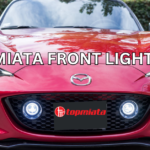
None of that is hype. It is what happens when you replace technology that was designed in the 1980s with something built for now. If your build is NA, start with the ultimate guide to Miata front lights to understand the full picture before committing to a specific path. If you are NC or ready to explore the full curated LED range across generations, led.topmiata.com is where the build continues.
Passion meets precision. The lighting is part of that story too.
Frequently Asked Questions
Are LED headlights worth it on an NA Miata?
Yes. The NA uses a 7-inch H6024 sealed beam format that accepts direct-fit LED replacements without housing modification. The output improvement over a 30-year-old halogen sealed beam is substantial, and the install is straightforward.
Do LED taillights require any wiring changes on the NC?
Not with the right product. Quality MX-5 LED taillights designed specifically for NC2/NC3 fitment use the factory harness connector. E-Mark-certified assemblies install as a direct replacement with no cutting or rewiring required.
Will LED bulbs cause a flicker or error light on my Miata?
They can if the LEDs are not CAN bus-compatible. On NB, NC, and ND models with more advanced body computers, Canbus-correct LEDs include load resistors that prevent the low-draw issue from triggering a warning. Always confirm CAN bus compatibility before purchasing.
What is the difference between plug-and-play LEDs and a full LED assembly?
Plug and play LEDs are replacement bulbs that fit inside your existing housing. A full LED assembly replaces the entire housing and reflector unit. Full assemblies typically offer better beam control and a cleaner aesthetic result but cost more and involve a more involved install.
Are sequential LED indicators legal on road-registered Miatas?
In most markets, yes — provided the unit carries the appropriate certification (DOT/SAE for the US, E-Mark for Europe) and the flash rate falls within the legal range. Always confirm certification before purchasing for your specific region.
How long do LED taillights and headlights last compared to halogen?
LED emitters typically last 25,000 to 50,000 hours under normal operating conditions. A halogen filament in a high-vibration environment like a driven Miata may last a fraction of that. The longevity difference is one of the most practical arguments for the switch.