No products in the cart.
LED Interior Light Conversion for NA, NB & NC Miata Cabin Controls
If your cabin still glows with tired halogen bulbs, a Miata LED interior light conversion is one of the fastest ways to modernize the cockpit without losing the car’s analog charm. From the NA’s vintage gauge cluster to the NB’s cleaner dash layout and the NC’s more refined controls, fresh LEDs can transform visibility, color consistency, and nighttime style in one weekend.
Done right, this upgrade is more than cosmetic. Crisp LED output makes the speedometer, HVAC markings, and footwell area easier to read at a glance, especially on dark back roads or late-night track weekends. The trick is choosing the right bulb type, color temperature, and polarity strategy for your chassis so the result looks factory-plus rather than harsh or overdone.
Why a Miata LED Interior Light Conversion Changes the Whole Cabin
Factory incandescent bulbs were never designed to be dramatic. They run warm, fade over time, and often create uneven hotspots behind the gauge faces and HVAC icons. A well-planned LED swap delivers a cleaner light pattern, lower heat, and better long-term consistency. For drivers who spend real time in their cars, that means easier reading of the cluster and a cabin that feels intentionally updated instead of simply refurbished.
In the NA, the glow is part of the car’s personality, but old bulbs can make the dash look yellow and tired. In the NB, the slightly more modern interior benefits from sharper illumination that brings out the textures in the switchgear. In the NC, LED lighting pairs especially well with the cabin’s more contemporary design, giving the controls a sharper OEM-style finish. If you’re building a street car, show car, or a weekend canyon Miata, the visual payoff is immediate.
There’s also a practical side. LEDs draw less current and generate less heat inside delicate plastic housings and light pipes. That matters in older cars where brittle trim and aged diffusers can already be fragile. For drivers who are also chasing a cleaner interior refresh, it’s smart to combine lighting work with other cabin upgrades like NA Miata parts, NB Miata parts, or NC Miata parts depending on chassis.
Pro tip: the best LED interior conversions look subtle in daylight and brilliant at night. Aim for even illumination, not maximum brightness.
Gauge Cluster, HVAC, and Footwell Lighting: What to Replace First
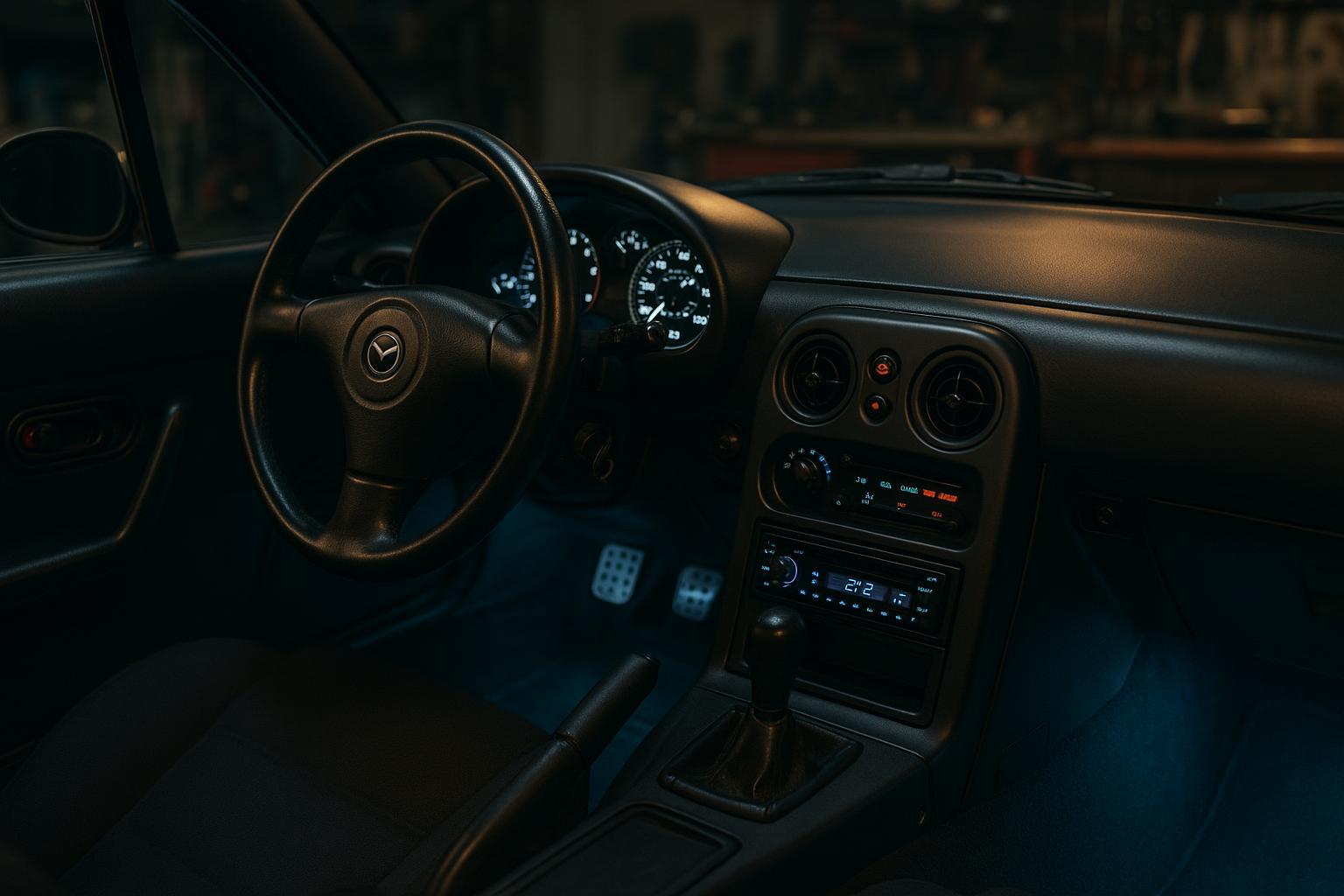
The smartest order is usually gauge cluster first, HVAC second, and footwell lighting third. The gauge cluster is the most visible upgrade because it affects the car’s main instrumentation, and it’s where many owners notice faded bulbs or uneven lighting first. Swapping these bulbs immediately improves readability of the tach, speedometer, warning icons, and fuel level display. If you still have a dim or patchy cluster, that’s the first place to focus.
HVAC bulbs are the next priority because the climate controls are used constantly and often sit low in the dash where visibility is poor. A clean LED glow makes the temperature knobs, fan settings, and defrost symbols easier to see without turning the cabin into a nightclub. Footwell lighting is the finishing touch. It adds ambiance, helps with nighttime entry and exit, and can make the interior feel significantly more premium if the color matches the rest of the cabin.
For many owners, this is also the right time to address other interior touchpoints. A refreshed shifter area with a new boot, a cleaner center stack, or improved trim can make the LED result feel cohesive. If you’re planning a broader cockpit update, browse the Miata maintenance and upgrade knowledge base for related interior work and installation guidance.
Bulb type and fitment basics
Most interior conversions use direct-replacement wedge bulbs, but the exact size and socket style can vary by chassis and location. The NA and NB often rely on small twist-lock or wedge-style bulbs behind the cluster and HVAC panel, while the NC uses a more integrated layout in some areas. Before ordering anything, remove one bulb, inspect the base, and verify the physical space behind the lens. A bulb that fits electrically may still be too long, too wide, or aimed poorly for the housing.
Pay attention to beam direction. Some LED bulbs throw light in a narrow pattern, which can create bright spots and dark corners if the housing was designed for a filament bulb that radiates in all directions. The best results usually come from multi-chip or omni-directional LEDs that mimic the original bulb’s spread. That keeps the cluster legible and prevents the common “hot center, dark edges” look.
NA vs NB vs NC: Interior Lighting Differences That Matter
The NA Miata is the most sensitive to color choice because its cabin design is the oldest and most characterful. Warm white can preserve a classic feel, while cool white gives the gauges a more modern, motorsport-inspired look. Because the NA dash plastics and light filters were built around incandescent warmth, overly blue LEDs can look cheap if they’re too aggressive. Many owners prefer a crisp white or a slightly warm 4000K-5000K tone.
The NB typically benefits from a balanced white LED setup because its interior shape is cleaner and more uniform. The cluster and HVAC pieces respond well to brighter output with good diffusion, especially if the original bulbs have already dimmed with age. The NB is also a popular platform for mixed interior upgrades, so pairing lighting with trim refreshes can create a noticeably newer cabin without rewriting the car’s identity. If you’re working on this generation, explore NB Miata generation-specific parts for complementary trim and interior details.
The NC has the most contemporary cabin of the three, so LED conversions can be slightly more aggressive without looking out of place. That said, the same rules apply: even spread, no flicker, and no mismatch between the gauge cluster and HVAC colors. The goal is cohesion. If the cluster is icy white but the HVAC panel is tinted green, the cabin will feel pieced together instead of refined.
| Chassis | Best LED Tone | Main Challenge | Recommended Result |
|---|---|---|---|
| NA | Warm white or neutral white | Old light filters and uneven spread | Classic look with improved clarity |
| NB | Neutral white | Diffusion behind cluster faces | Clean OEM-plus brightness |
| NC | Neutral to cool white | Matching multiple control areas | Sharp, modern cabin finish |
Installation Tips for a Clean, Flicker-Free Result
Start by disconnecting the battery and giving yourself room to work. Older Miata dash plastics can be stubborn, so use plastic trim tools and avoid forcing clips. Once the cluster or HVAC panel is out, test each LED before fully reassembling the dash. Polarity matters on many LED replacements, so if a bulb does not illuminate, rotate it 180 degrees and retest. That simple step solves a surprising number of “bad bulb” complaints.
When you install footwell LEDs, route the wiring cleanly and keep it away from pedals, steering column movement, and sharp metal edges. Use proper connectors or solder-and-heat-shrink joints rather than loose taps that can fail over time. If you want the footwell light to come on with an ignition trigger, door circuit, or dimmer-compatible source, confirm the wiring logic first so you do not create parasitic drain or strange behavior when the car is parked.
For a deeper restoration mindset, it helps to treat the cabin like a system. Replace fragile bulbs, clean contacts, inspect grounding points, and reassemble with care. If your car also needs age-related dashboard or switchgear attention, the NA interior accessories category is a smart place to continue the refresh after the lighting swap.
Pro tip: if your LED bulbs flicker, pulse, or glow faintly when the car is off, check the circuit, polarity, and any dimmer compatibility before assuming the bulbs are defective.
Choosing the Right Color, Brightness, and Style
Color choice should match the personality of the build. A tasteful street Miata often looks best with neutral white because it improves legibility without overpowering the dashboard. Enthusiasts who want a cleaner motorsport vibe may prefer a slightly cooler white, but avoid going so blue that the cabin feels aftermarket in a distracting way. Red can work for night driving, but it may reduce contrast on some gauge faces and can be harder to read quickly.
Brightness matters just as much as color. Too dim, and the upgrade feels pointless. Too bright, and the gauges become fatiguing on long drives. The sweet spot is a clear, evenly lit instrument panel that you can read instantly without it becoming the brightest object in the cabin. If your LED kit includes multiple output options, start conservative and increase only if the cluster still feels underlit.
Style consistency is the final detail. Match the cluster, HVAC, and footwell tones so the cabin has one unified atmosphere. That’s what separates a thoughtful Miata build from a parts-bin experiment. If you are also refreshing exterior or chassis details, consider how the interior lighting complements the rest of the car’s personality rather than competing with it.
What to Expect After the Swap
Once the conversion is complete, the cabin should feel sharper, cleaner, and easier to live with at night. The gauge needles and markings should stand out more clearly, the HVAC panel should be readable at a glance, and the footwells should add just enough ambience to make the interior feel special. For many owners, this is one of those rare mods that improves both form and function every single time they drive.
It’s also one of the best value upgrades in the Miata world. Compared with larger modifications, LED interior lighting is relatively affordable, visually impactful, and easy to tailor to each chassis. Whether you’re preserving an NA, modernizing an NB, or refining an NC, this is a mod that rewards careful selection and patient installation. For historical context on the platform, the Mazda MX-5’s global evolution helps explain why each generation’s cabin feels slightly different, while Mazda’s official brand site is a useful reference for the marque’s design philosophy.
If you want the cabin to feel like it belongs in 2026 without losing the soul of a lightweight roadster, a Miata LED interior light conversion is the move. Done thoughtfully, it sharpens every night drive and makes the whole cockpit feel like it was built for enthusiasts who notice the details.