No products in the cart.
Upgrading NA Miata Pop-Up Headlights: Low-Profile & Dual LED Kits
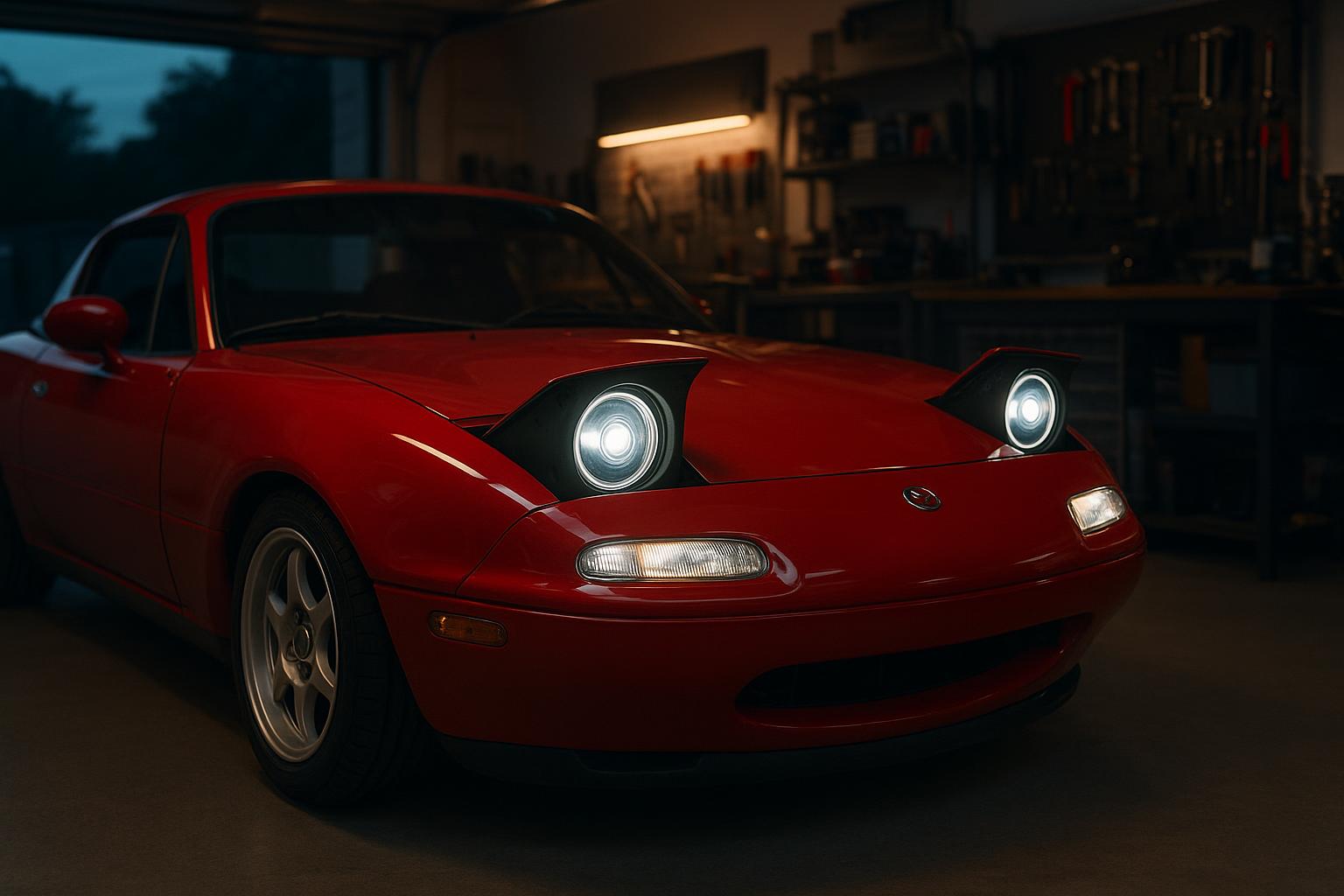
The NA Miata pop-up headlight upgrade is one of the cleanest ways to modernize the most iconic front end in roadster history without erasing its charm. Whether you want a lower-profile look, brighter dual LED output, or a stealth projector setup that still lets the headlights rise like factory, the best builds keep the pop-up motors, linkages, and personality intact.
The magic of the NA chassis is that it can look period-correct, track-ready, or subtly modern with just the right lighting package. If you want to understand how Mazda created the original MX-5, it helps to read the official background from Mazda’s corporate history and compare the platform’s legacy at Mazda MX-5 documentation. From there, the upgrade path becomes much clearer: lower visual bulk, better beam control, and smarter heat management.
Why NA Miata pop-up headlight upgrades matter
Factory NA lighting has undeniable character, but age has not been kind to every car. Yellowed lenses, tired motors, dim halogen bulbs, and brittle wiring can leave an otherwise beautiful Miata looking and feeling dated at night. A proper NA Miata pop-up headlight upgrade solves all of that while preserving the car’s identity.
Low-profile conversion kits are popular because they reduce the visual height of the headlight assembly when the lights are down, creating a smoother nose profile. Dual LED projector kits take a different route: they retain the pop-up structure but replace weak optics with sharper cutoff, better foreground spread, and far more usable output. For street cars, that means safer night driving. For track builds, it means better visibility in paddock conditions, night sessions, and wet-weather events.
Just as importantly, the right setup respects the pop-up motor system. The NA’s hidden-headlight mechanism is part of the car’s soul, and when it’s maintained properly, it stays reliable for years. That means checking relay health, motor timing, and the condition of the pivot bushings before tossing in new lights and calling it done.
What changes visually with low-profile kits
Low-profile kits are all about the closed-headlight silhouette. Instead of bulky housings that draw the eye upward, these conversions usually sit tighter in the bucket or use compact mounting hardware to make the front end look lower and cleaner. On a black, red, or silver NA, that subtle change can make the whole car feel more aggressive without needing a body kit.
For owners who want an OEM-plus appearance, this is often the sweet spot. You keep the pop-up drama, but the car looks less like a 1990s commuter sports car and more like a curated enthusiast build. If you’re pairing the look with other exterior changes, it makes sense to explore NA Miata parts and match the headlights with a front lip, grille detail, or cleaner bumper hardware.
Low-profile kits vs dual LED projector kits
There are two main schools of thought here. Low-profile kits focus primarily on appearance and packaging, while dual LED projector kits are built to improve actual road performance. The best NA Miata owners combine both goals: a stealthy look with modern light quality.
Dual LED setups usually feature a pair of compact projectors in each pod or a dual-element arrangement that creates a wider beam pattern. The biggest gain is not just brightness, but beam control. Good projectors produce a clean cutoff, which reduces glare for oncoming traffic and concentrates light where you need it. That matters more than raw lumen numbers, especially on a lightweight car that gets driven hard and often in imperfect conditions.
Low-profile assemblies can also help reduce visual clutter behind the lens area. If your build is already moving toward a more functional front end, consider pairing the lighting with an airflow-minded piece like a NA Miata radiator panel or other front-end support hardware. On older cars, keeping the nose tidy often means keeping the cooling stack efficient too.
| Option | Main benefit | Best for |
|---|---|---|
| Low-profile conversion kit | Sleeker closed-headlight appearance | Show builds and OEM-plus styling |
| Dual LED projector kit | Sharper beam pattern and better night visibility | Daily driving and spirited canyon use |
| Hybrid stealth setup | Clean look with upgraded optics | All-around enthusiast builds |
Choosing beam quality over hype
When people shop headlights, they often get distracted by color temperature. A 6000K bulb may look modern, but beam pattern and real road illumination matter far more than a blue-white tint. For the NA, a well-designed projector in the 4300K to 5000K range usually gives the best balance of contrast, weather performance, and reduced eye fatigue.
That’s especially important if your car still sees rain, mountain roads, or long highway drives. A quality low-profile or projector conversion should light up the shoulder, the apex, and the lane ahead without scattering light into the air. If the kit promises huge brightness but no cutoff, it is usually style first and performance second.
Keeping the pop-up motor functionality alive
The most important part of any NA lighting project is remembering that the pop-up system is mechanical, not just cosmetic. Motors, gears, relays, and linkage points all work together, and the best upgrades preserve that chain. If the lights open unevenly, stop halfway, or clunk loudly, fix that before installing new hardware.
Start with the basics: inspect the motor arms for play, check the headlight relay system, and make sure the headlight buckets move freely by hand with the system safely powered down. Old grease can harden, creating resistance that makes the motors work harder than necessary. Fresh lubrication on the pivot points can restore smooth motion and reduce strain.
Electrical health matters too. Voltage drop is a common issue on older NA cars, especially if the harness has been modified over the years. Clean grounds, healthy connectors, and properly sized wiring can make a noticeable difference in motor speed and light consistency. For a broader restoration mindset, browse the TopMiata maintenance and repair guides for more chassis-specific service insight.
Pro tip: If you want the pop-up motors to last, test the system before finalizing the new headlight aim. Repeated adjustments with poorly seated hardware can load the mechanism and create avoidable wear.
Common maintenance checks before upgrading
- Motor timing: both headlights should rise and lower at the same speed.
- Pivot condition: inspect bushings, brackets, and fasteners for slop.
- Relay and fuse health: weak relays can cause slow or inconsistent operation.
- Wiring condition: look for old repairs, corrosion, or brittle insulation.
- Beam aim: re-aim headlights after any conversion or bulb change.
Best use cases for track, street, and show builds
For a street-driven NA, a dual LED projector setup is usually the smartest choice. It keeps the pop-up identity while delivering better nighttime confidence, especially on unlit back roads. If the car is also a weekend cruiser or cars-and-coffee favorite, a low-profile kit can sharpen the look without forcing a full styling overhaul.
Track builders should think function first. A reliable, well-sealed assembly with strong output and proper wiring is more valuable than an aggressive visual gimmick. If your car already has chassis bracing, aero, and suspension work, the headlights should match that same purposeful philosophy. In that case, a stealth projector setup is the best blend of modern visibility and classic NA aesthetics.
Show cars sit at the opposite end of the spectrum, where presentation matters most. Here, the visual impact of a low-profile conversion can be huge, especially when matched with clean paint, restored trim, and carefully chosen details. The key is making the car look intentional, not overbuilt. That is what has always made the NA special.
How to make the upgrade look factory-correct
The easiest way to ruin an NA headlight upgrade is by ignoring fitment and finish. Uneven gaps, exposed wiring, cheap brackets, and mismatched lens color instantly break the illusion. The best builds use tidy harness routing, blacked-out hardware where appropriate, and careful alignment so the headlights sit flush in both the up and down positions.
If you want a cleaner front-end presentation, consider small supporting details that complement the lighting instead of competing with it. A tidy front-end package can include a refreshed grille area, subtle aero, and cleaned-up mounting points. That is why many owners pair lighting work with other chassis-focused pieces from the TopMiata shop to build a cohesive nose rather than a collection of parts.
At the end of the day, the ideal NA Miata pop-up headlight upgrade is the one that looks like it could have come from Mazda if the company had one more year to refine the car. Keep the motors working, choose optics that actually improve driving, and let the pop-ups keep doing what made the NA unforgettable.