No products in the cart.
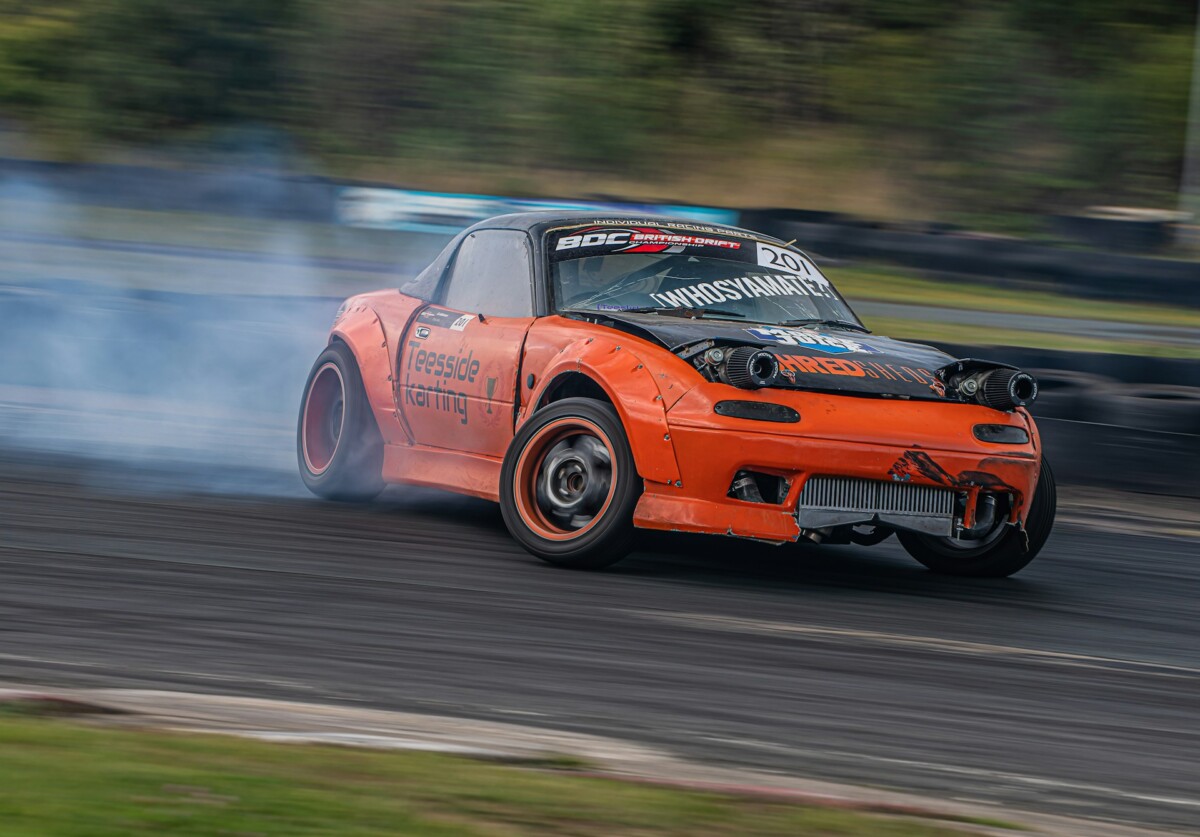
Boost Your MX-5 Miata’s Performance on the Track!
Miata Performance Mods: Start With Grip, Not Horsepower
Miata Performance Mods are not about turning your MX-5 into a 500-horsepower monster. That misses the point of the car. On a track, the fastest Miata is usually the one that can carry more speed through corners, brake later, and stay predictable lap after lap.
The MX-5 already has the right foundation. It is lightweight, rear-wheel drive, compact, and built around responsive handling. The current ND, for example, weighs roughly 2,366 lb in manual form, with a 53/47 front-to-rear weight distribution. That is a serious advantage when the goal is corner speed rather than straight-line acceleration.
The smart approach is simple: make the car communicate better, make it grip harder, control its movement, and then add power only when you actually need it.
That philosophy works across NA, NB, NC, and ND models. The exact parts will change, but the priorities remain remarkably similar.
🔧 The Best Miata Performance Mods Follow a Logical Order
One mistake is common among new track drivers: buying parts before understanding what the car is doing.
A huge wing looks fast. A loud exhaust sounds fast. More horsepower feels fast.
None of those automatically make you faster around a circuit.
Instead, build the car in stages. Start with tires and alignment. Move to brakes and suspension. Then reduce unnecessary weight. Finally, consider engine and drivetrain upgrades.
This approach also makes it much easier to understand which modification actually improved the car.
A good example is a track Miata that feels nervous through fast corners. Throwing more power at it will not solve the problem. A proper alignment, better dampers, suitable spring rates, and the right tires might.
🛞 Tires Are Your First Real Performance Upgrade
If you only make one major modification before your next track day, make it the tires.
Everything the car does eventually passes through four small contact patches. Better tires can improve braking, cornering, acceleration, and steering response at the same time.
For a street-driven Miata that occasionally sees track use, a good high-performance summer tire can be an excellent compromise. If the car is becoming more track-focused, a dedicated 200-treadwear tire or similar track-oriented option can provide considerably more grip.
However, more grip is not always automatically better.
A very aggressive tire can expose weaknesses in the suspension. It can also increase loads on wheel bearings, bushings, brakes, and other components. The right tire depends on your car, driving level, track, weather, and intended use.
Wheel choice matters too. Lightweight wheels reduce unsprung and rotational mass. That can help the suspension react more quickly while also improving steering response and acceleration.
Don’t simply chase the widest tire that will physically fit. A balanced wheel-and-tire package is more valuable than an oversized setup that makes the car heavy and difficult to control.
📐 A Proper Alignment Can Transform Your Miata
This is one of the most overlooked Miata performance mods.
Before replacing suspension components, get the alignment checked by someone who understands performance driving.
Factory alignment settings are designed as a compromise. They need to work for commuting, tire life, stability, comfort, and a wide range of drivers. A track car has different priorities.
More negative camber can help keep the tire’s contact patch working when the car rolls into a corner. Caster can influence steering feel and front-end behavior. Toe affects turn-in and stability.
There is no universal alignment number that works perfectly for every Miata. NA, NB, NC, and ND chassis have different suspension geometry, while tire choice and driving style also matter.
For that reason, treat alignment as a tuning tool rather than a one-time installation.
Record your settings. Watch tire temperatures and wear. Then adjust one variable at a time.
For more detailed Miata-specific alignment information, you can also read our Ultimate Guide to Mazda MX-5 Miata Alignment Settings.
🏎️ Upgrade the Suspension Without Ruining the Car
A Miata should feel controlled, not brutally stiff.
That distinction matters.
Coilovers, springs, dampers, and anti-roll bars can dramatically change how an MX-5 behaves. The problem is that simply installing the stiffest parts available often creates a car that is worse on real roads and sometimes slower on track.
Good suspension keeps the tires working.
Quality dampers control how quickly the chassis moves. Appropriate springs reduce excessive body movement. Anti-roll bars can help tune the balance between front and rear grip.
The goal is not to eliminate every bit of body roll. Some movement is useful because it tells the driver what the chassis is doing.
A well-set-up Miata should give you confidence approaching the limit. You should know when the front tires are beginning to wash wide or when the rear is becoming lighter under braking.
That communication is one of the reasons the MX-5 is so enjoyable on a circuit.
🛑 Brakes: Make the Car Faster by Stopping Better
Engine power gets attention. Brakes win confidence.
Track driving puts much more heat into the braking system than normal road driving. Factory pads that feel perfectly fine on the street can become the weak point after repeated hard stops.
A sensible brake upgrade normally starts with high-temperature track-capable brake pads and fresh high-quality brake fluid.
Good pads provide more consistent friction at high temperatures. Fresh fluid reduces the risk of pedal fade caused by moisture or excessive heat.
Brake lines and larger brake systems can come later depending on the car and level of use.
Don’t assume that a giant brake kit is automatically better. Larger components can add weight, particularly unsprung weight. On a lightweight Miata, unnecessary mass works against the car’s biggest advantage.
The best brake setup is the one that remains consistent throughout the session.
⚖️ Lightweight Miata Performance Mods Make a Big Difference
The MX-5 does not need to become a stripped-out race car to benefit from weight reduction.
Start with the obvious stuff.
Remove unnecessary items from the trunk before a track day. Avoid carrying tools, equipment, or accessories you do not need. If the car is becoming a dedicated track build, then interior and exhaust components can be evaluated later.
Weight reduction improves several areas simultaneously.
The car accelerates harder. It brakes more easily. Tires work less. Suspension has less mass to control.
Most importantly, removing weight from the wrong place is difficult to undo. Adding horsepower can create more heat, more drivetrain stress, and more traction problems. Removing 50 or 100 pounds simply makes the entire car work less.
That is very Miata.
🔥 Should You Add More Power?
Eventually, maybe.
But don’t start there.
For many track drivers, the stock engine provides enough performance to learn proper braking points, corner entry, throttle control, racing lines, and weight transfer. A lower-powered car can actually make you a better driver because you cannot simply compensate for mistakes with acceleration.
Once the chassis is sorted, power upgrades become more meaningful.
An intake and exhaust can sharpen the character of the car, although expectations should remain realistic. Software tuning can help depending on the engine and setup. Forced induction is where the performance conversation becomes much more serious.
Turbocharging or supercharging can transform an MX-5, but it also changes the demands placed on the cooling system, clutch, transmission, differential, brakes, and tires.
At that point, you are building a complete performance system rather than simply installing an engine modification.
🧠 The Driver Is Still the Most Important Upgrade
There is one modification nobody can buy.
Seat time.
A moderately modified Miata driven by someone who understands braking, throttle control, weight transfer, and racing lines can embarrass a heavily modified car driven badly.
Track driving rewards smooth inputs.
Brake in a straight line when appropriate. Release the brake progressively. Turn the car once the front tires are ready. Get back on the throttle smoothly as you unwind the steering.
Then repeat.
This is why the best Miata Performance Mods are the ones that make the car more predictable. If a modification makes the car difficult to understand, it is not necessarily an upgrade.
🏁 A Smart Miata Track Build: What Should You Buy First?
For most owners, this is a much better progression than buying random parts:
Stage 1 — Prepare the car
- Fresh engine oil and fluids
- Fresh brake fluid
- Healthy brake system
- Good tires
- Proper alignment
- Correct tire pressures
Stage 2 — Improve control
- Performance brake pads
- Quality dampers or coilovers
- Appropriate springs
- Adjustable anti-roll bars
- Lightweight wheels
Stage 3 — Increase capability
- Track-focused tires
- Improved cooling
- Weight reduction
- Better seats and driver positioning
- Appropriate safety equipment
Stage 4 — Add power
- Intake and exhaust where appropriate
- ECU tuning
- Forced induction for serious builds
- Supporting drivetrain and cooling upgrades
This order keeps the car balanced. More importantly, it lets you measure progress.
🏆 Build the Miata Around the Track, Not the Parts Catalog
The fastest MX-5 is not necessarily the one with the longest modification list.
It is the car where every part has a purpose.
A good set of tires works with a good alignment. The alignment works with the suspension. The suspension works with the tires. The brakes remain consistent. The driver understands exactly what the chassis is doing.
That is when Miata Performance Mods start making sense.
The MX-5 has always been about momentum. Keep it light. Keep it balanced. Make it predictable. Then learn how to drive it properly.
Once you do that, even a relatively simple Miata can become an extremely capable track car.
❓ FAQ: Miata Performance Mods for Track Use
What are the best Miata Performance Mods for a beginner?
Start with performance tires, a professional alignment, brake pads, and fresh brake fluid. These upgrades provide useful improvements without making the car unnecessarily difficult to drive.
Do I need coilovers for track driving?
No. Coilovers are useful because they provide suspension adjustability, but a well-matched spring and damper combination can work extremely well. The important thing is choosing a setup designed for your intended use.
Are bigger brakes necessary on a Miata?
Not always. A lightweight MX-5 can perform very well with its original calipers when paired with suitable pads and high-quality fluid. Bigger brakes become more useful as speed, tire grip, vehicle weight, and track demands increase.
Should I add horsepower before suspension upgrades?
Generally, no. Improve the tires, brakes, alignment, and suspension first. Once the chassis is capable of using additional power, an engine upgrade becomes much more valuable.
How much negative camber should a Miata have on track?
There is no single correct number. The ideal setting depends on the Miata generation, suspension, tire, track, and driving style. Start with a sensible performance alignment and use tire wear and temperatures to guide further changes.
What is the biggest mistake when modifying a Miata for the track?
Changing too many things at once. If you install tires, coilovers, anti-roll bars, brakes, and an alignment simultaneously, you may improve the car but have no idea why. Make changes systematically and measure the results.
Is a Miata really fast enough for track driving?
Absolutely. Its strength is not massive horsepower. Its advantage is momentum, low weight, balance, and communication. A properly prepared MX-5 can be extremely quick on technical circuits while remaining rewarding to drive.
🔚 Final Thoughts: Make Every Lap Count
The best Miata Performance Mods don’t change what makes the MX-5 special. They sharpen it.
Improve the contact with the road. Control the chassis. Make the brakes consistent. Reduce unnecessary weight. Then add power only when the rest of the car is ready for it.
That is how you turn a fun Miata into a serious track weapon without losing the character that made you buy the car in the first place