
No products in the cart.
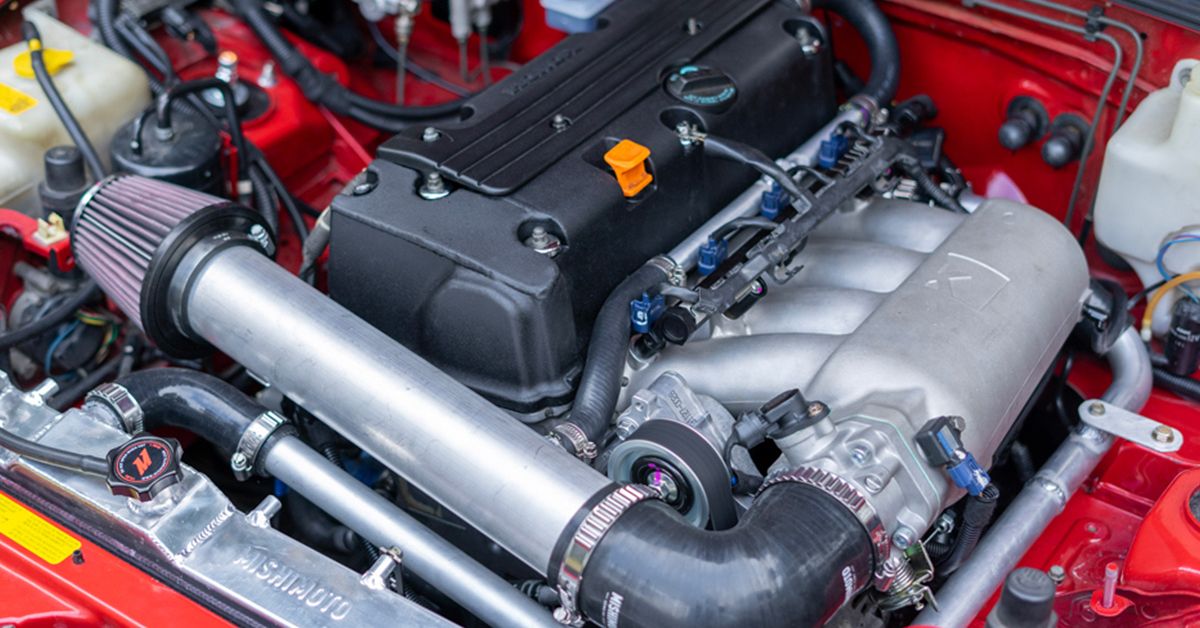
The 2026 Miata Modification Economics Map: Cost vs. Performance Explained
Miata Modification 2026 is no longer just about horsepower bragging rights. Today it is about cost efficiency, reliability, and usable performance. Every Miata owner eventually asks the same question: Where is the sweet spot between money spent and performance gained?
Some paths promise massive power. Others deliver balanced results. Meanwhile, a few upgrades simply burn money faster than they deliver speed.
That is why the 2026 Miata Modification Economics Map exists. Think of it as a roadmap showing how different build paths compare in cost, horsepower, complexity, and real driving enjoyment. Three main directions dominate the Miata tuning world:
Forced induction (turbo or supercharger)
K-series engine swaps
LS V8 conversions
Each option has a different cost-to-performance curve. Some reach a sweet spot quickly. Others push far into the point of diminishing returns.
Let’s break down the economics of each path.

Understanding the Miata Modification 2026 Performance Curve
Before diving into specific builds, it helps to understand the performance curve.
Most modifications follow the same pattern:
Early upgrades deliver huge gains for reasonable cost
Mid-level builds increase performance steadily
Extreme builds cost exponentially more
Miata owners often experience the biggest jump early in the process. Suspension, tires, and mild power upgrades transform the car. However, once builds exceed 300–400 horsepower, costs skyrocket while gains shrink.
This pattern creates two critical zones:
The Sweet Spot – Maximum performance per dollar
The Diminishing Returns Zone – Massive spending for smaller improvements
The goal is finding where your build sits on that map.
Turbocharging: The Miata Modification 2026 Sweet Spot
Turbocharging remains the most popular Miata modification 2026 path, and the reason is simple: it offers the best cost-to-power ratio.
A typical Stage 1 turbo build costs between $4,000 and $7,000 depending on parts and labor. In return, owners often gain 80–120 horsepower.
That changes everything.
An NA or NB Miata stock produces around 116–140 hp. Add a mild turbo kit, and suddenly the car makes 220–250 hp. The lightweight chassis suddenly feels like a small supercar.
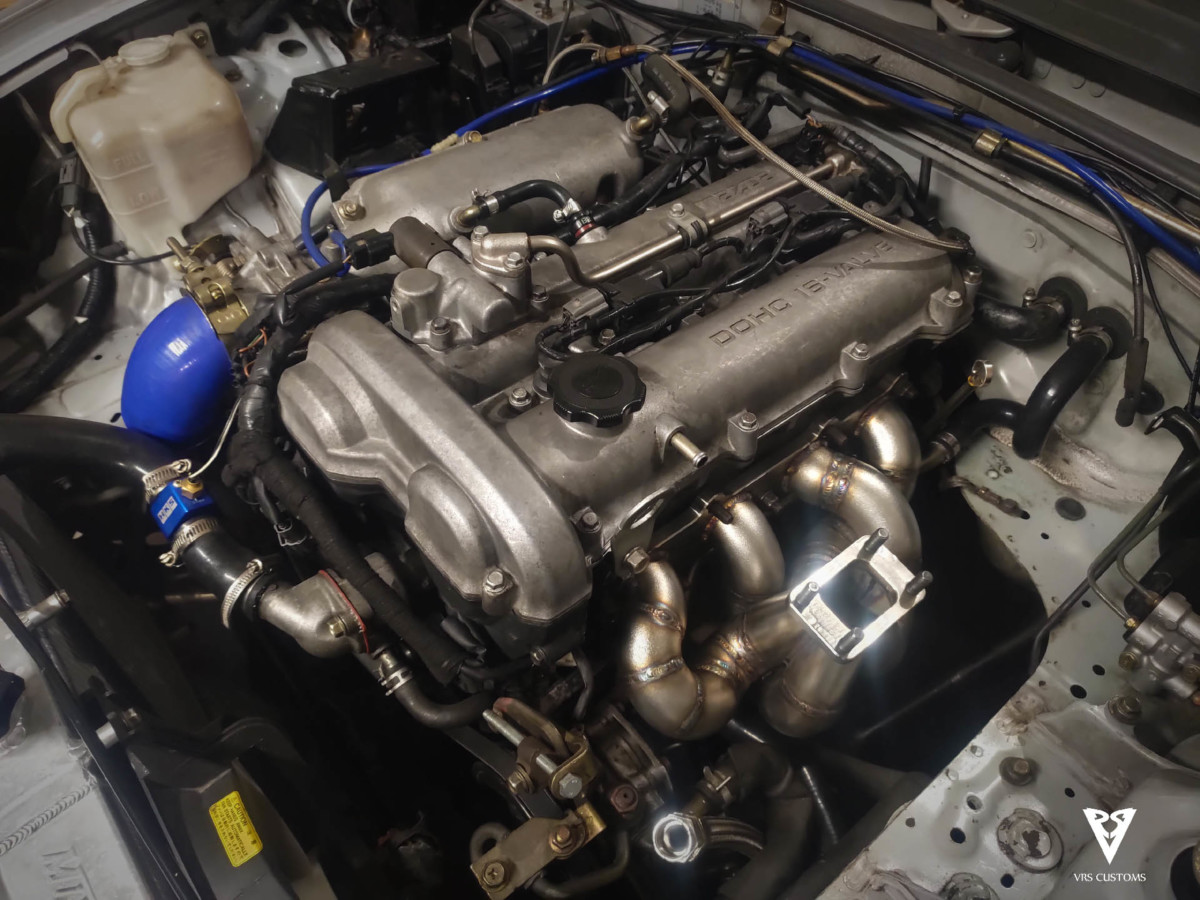
Turbo Manifold for 1.8 NA & NB Mazda Miata MX-5
Why Stage 1 Turbo Is the Sweet Spot
The economics make sense.
Stock internals usually survive
Installation complexity remains manageable
Reliability stays relatively high
Power doubles without doubling cost
Drivers quickly realize that 250 horsepower in a 2,300-pound car feels wild.
Many enthusiasts install upgrades like improved intake airflow or cooling upgrades alongside tu
rbo kits. Components such as the Mazda MX-5 Miata Fuel Line Support help maintain reliability during forced induction builds.
More importantly, turbo builds preserve what makes the Miata special: balance.
Handling stays sharp. Weight distribution remains intact. The car still feels like a Miata—just much faster.
Where Turbo Builds Hit Diminishing Returns
Problems begin when owners push beyond 350 horsepower.
That requires:
Forged internals
Standalone ECU systems
Larger turbos
Stronger transmissions
Cooling upgrades everywhere
Suddenly the build crosses $15,000–$20,000.
Power increases, but the cost curve becomes steep. At that point, other swap options start looking tempting.
K-Swap Builds: The Balanced Performance Path
The Honda K-series swap has exploded in popularity during the last few years. For many enthusiasts, it represents the ultimate Miata Modification 2026 compromise between reliability and power.
The appeal is obvious.
Honda’s K engines are known for durability and high rev limits. Stock K24 engines already produce 200–210 horsepower without forced induction.
That means a swapped Miata instantly reaches the turbo sweet spot power level, but with factory reliability.
K-Swap Cost Breakdown
A typical K-swap build costs $12,000–$18,000, depending on parts and labor.
Expenses include:
Engine and transmission
Swap kit
Wiring harness
ECU
Custom mounts and driveshaft
The result? Around 220–250 horsepower naturally aspirated.
Power delivery feels smooth. Throttle response becomes instant. Revving past 8,000 RPM turns the Miata into something closer to a track weapon.
Read more about How To K20 Swap a RHD Mazda Miata/MX-5
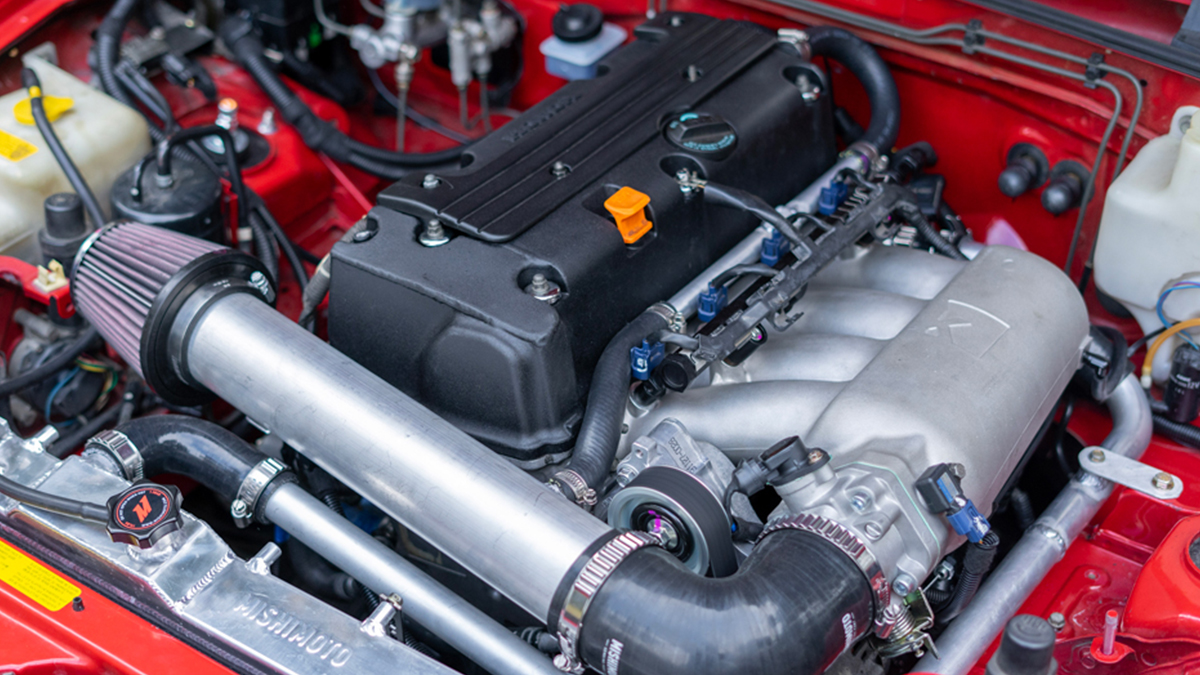
Why Some Enthusiasts Choose K-Swaps
Several benefits explain the trend.
First, reliability improves compared to high-boost turbo builds.
Second, track drivers love consistent power delivery.
Third, maintenance becomes easier since K engines are widely available.
Still, the economics are different from turbocharging. Horsepower gains come at a higher cost. The cost-per-horsepower ratio becomes less attractive.
That means the K-swap sits slightly past the turbo sweet spot on the modification map.
Yet many owners accept that tradeoff for reliability and track durability.
LS V8 Conversions: Maximum Power, Maximum Cost
At the far end of the Miata Modification 2026 map sits the legendary LS V8 swap.
These builds transform the Miata into something wild.
Imagine a car weighing around 2,500 pounds producing 400–500 horsepower.
The acceleration becomes violent. The sound alone changes the entire character of the car.
Read more about LS-Swapped Miata is the Grown-Up Go Kart We Need in Our Lives
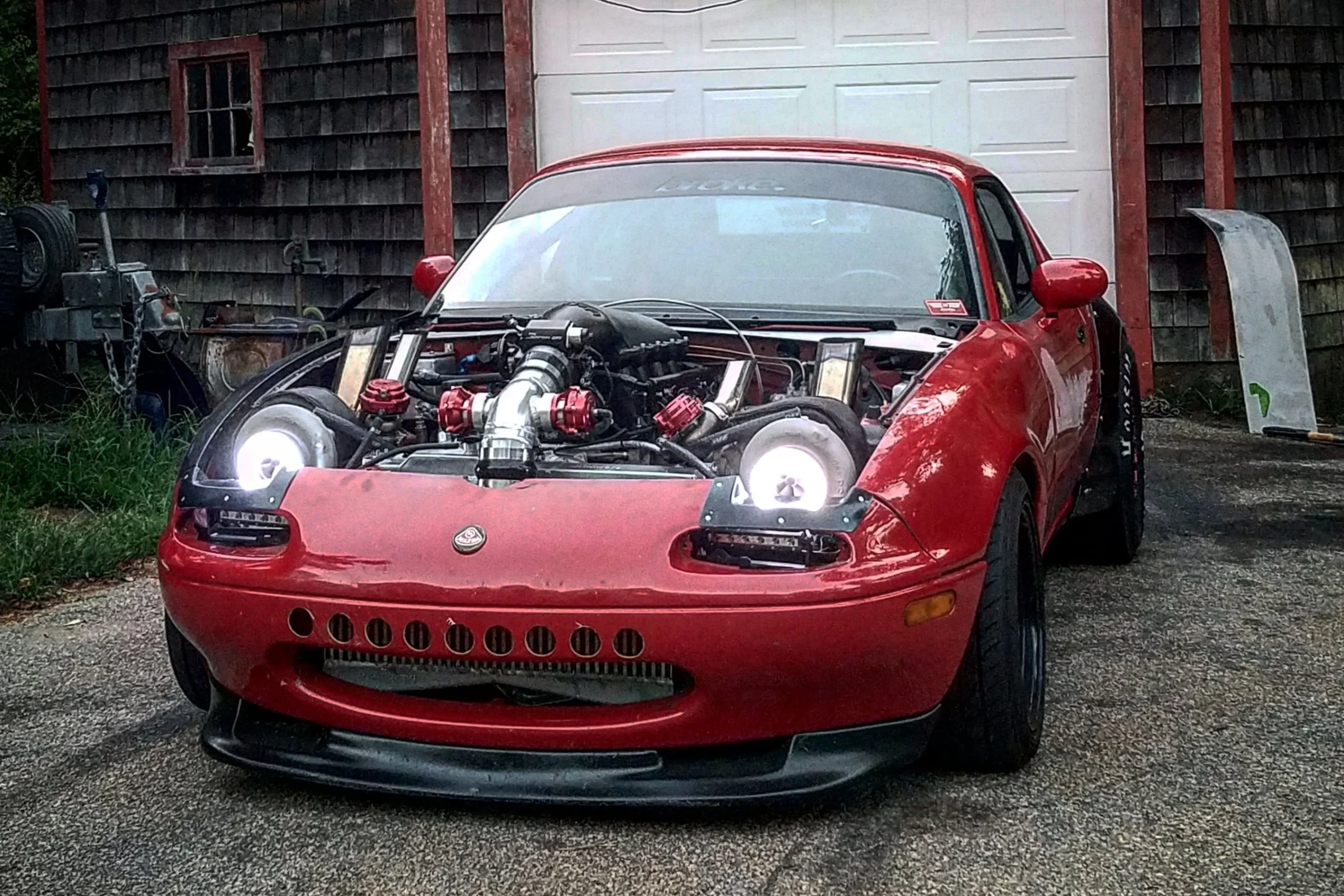
LS swapped Miata from https://www.holley.com/
The Economics of an LS Swap
Unfortunately, this level of performance comes at a serious cost.
A typical LS Miata build ranges between $25,000 and $50,000 depending on parts.
Major costs include:
LS engine and transmission
Custom subframe and mounts
Cooling system redesign
Reinforced drivetrain
Suspension upgrades
Brake upgrades
Weight distribution also changes. Engineers work hard to maintain balance, but physics always wins.
Why LS Builds Enter the Diminishing Returns Zone
At first glance, 450 horsepower seems worth it.
Yet the economics shift dramatically.
Consider this comparison:
| Build Type | Typical Cost | Horsepower | Cost per HP Gain |
|---|---|---|---|
| Turbo Stage 1 | $5k–$7k | ~250 hp | Excellent |
| K-Swap | $12k–$18k | ~240 hp | Moderate |
| LS V8 Swap | $25k–$50k | ~450 hp | Poor |
The LS build delivers massive power, but the price grows much faster than performance.
That is the classic diminishing returns zone.
Still, some enthusiasts pursue it anyway. For them, the goal is not efficiency. The goal is to build the wildest Miata possible.
Visualizing the Miata Modification 2026 Economics Map
If we plotted the builds on a graph, the shape would become obvious.
X-axis: Total build cost
Y-axis: Performance gain
Three curves emerge:
Turbo builds rise sharply early, then flatten
K-swaps climb steadily
LS swaps spike late but at extreme cost
The sweet spot sits between $4,000 and $10,000, where turbo builds dominate.
Beyond that point, each additional horsepower becomes dramatically more expensive.
The pattern reflects a basic engineering truth explained in many automotive studies, including discussions on performance tuning economics at resources like MotorTrend.
That is why experienced builders always advise beginners to start small and build gradually.
Conclusion: Choosing the Right Miata Modification Path in 2026
The Miata Modification 2026 landscape offers more possibilities than ever before.
Turbocharging remains the economic champion. A Stage 1 turbo build delivers the most performance for the least money.
K-swaps offer a balanced middle ground. They trade higher cost for reliability and track consistency.
LS V8 builds push the Miata into supercar territory. However, they sit deep in the diminishing returns zone.
Most enthusiasts eventually discover the same truth: 250 horsepower in a Miata is already plenty.
That level keeps the car fast, balanced, and fun without turning the project into a financial black hole.
Build wisely, choose upgrades carefully, and the Miata will reward you every mile.
FAQ: Miata Modification 2026
What is the best Miata modification for performance in 2026?
Turbocharging remains the best option. A Stage 1 turbo kit offers the highest power gain per dollar and keeps the car balanced.
How much horsepower can a stock Miata engine handle with a turbo?
Most stock Miata engines handle 220–250 horsepower reliably with proper tuning and supporting upgrades.
Is a K-swap better than a turbo Miata?
Not necessarily. K-swaps provide excellent reliability and linear power. However, they usually cost more than turbo builds for similar horsepower.
Why do people LS swap Miatas?
LS swaps deliver extreme power and unique character. Enthusiasts often choose them for maximum performance rather than cost efficiency.
Where is the Miata performance sweet spot?
Most builders agree the sweet spot is around 220–260 horsepower, where the car remains balanced, reliable, and affordable.
Meta Description:
Tags:
Related Keywords:
Miata turbo kit, MX5 K swap, LS swap Miata cost, Miata performance tuning, Miata horsepower upgrades